Kategorie: Thoughts

english version

  • La danse des Sabines

    The local cultural festival is taking place again this coming weekend. That means a flurry of last-minute preparations—since, naturally, I left things far too late once again!

    I’ve now got my shortlist of photos ready to take to the print shop next week. Just need a few accessories—like mats and hanging hardware—and I should be all set! So, no problem at all! 😉

    I’ve also planned a special edition for this event. Alongside the new images from the past two years, I’m going to release a new edition of a relatively old series from 2004(!). Those photos were taken during a holiday on El Hierro with my first serious digital camera, the Canon G1. I still have it, even though I haven’t used it in ages. It probably still works, though!

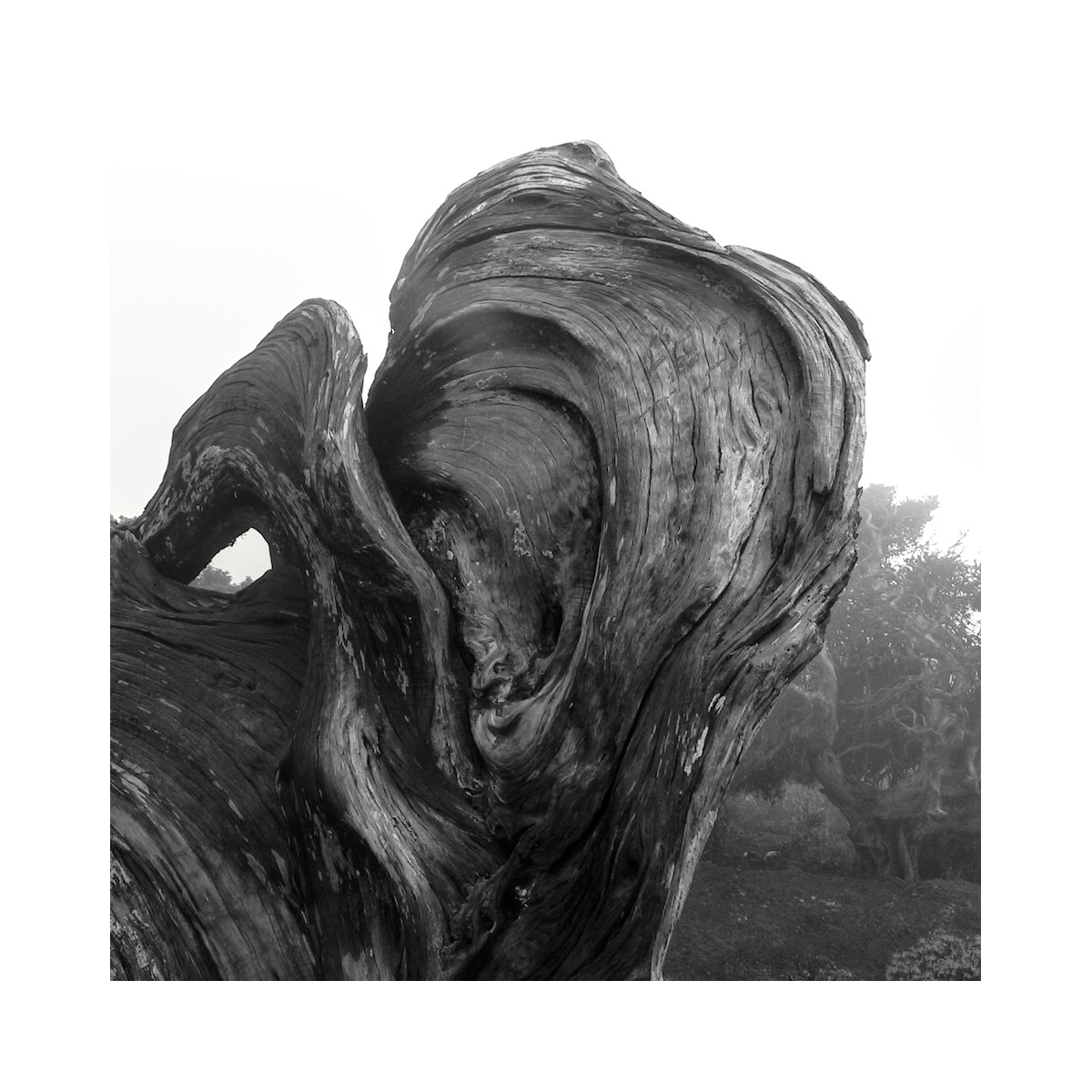
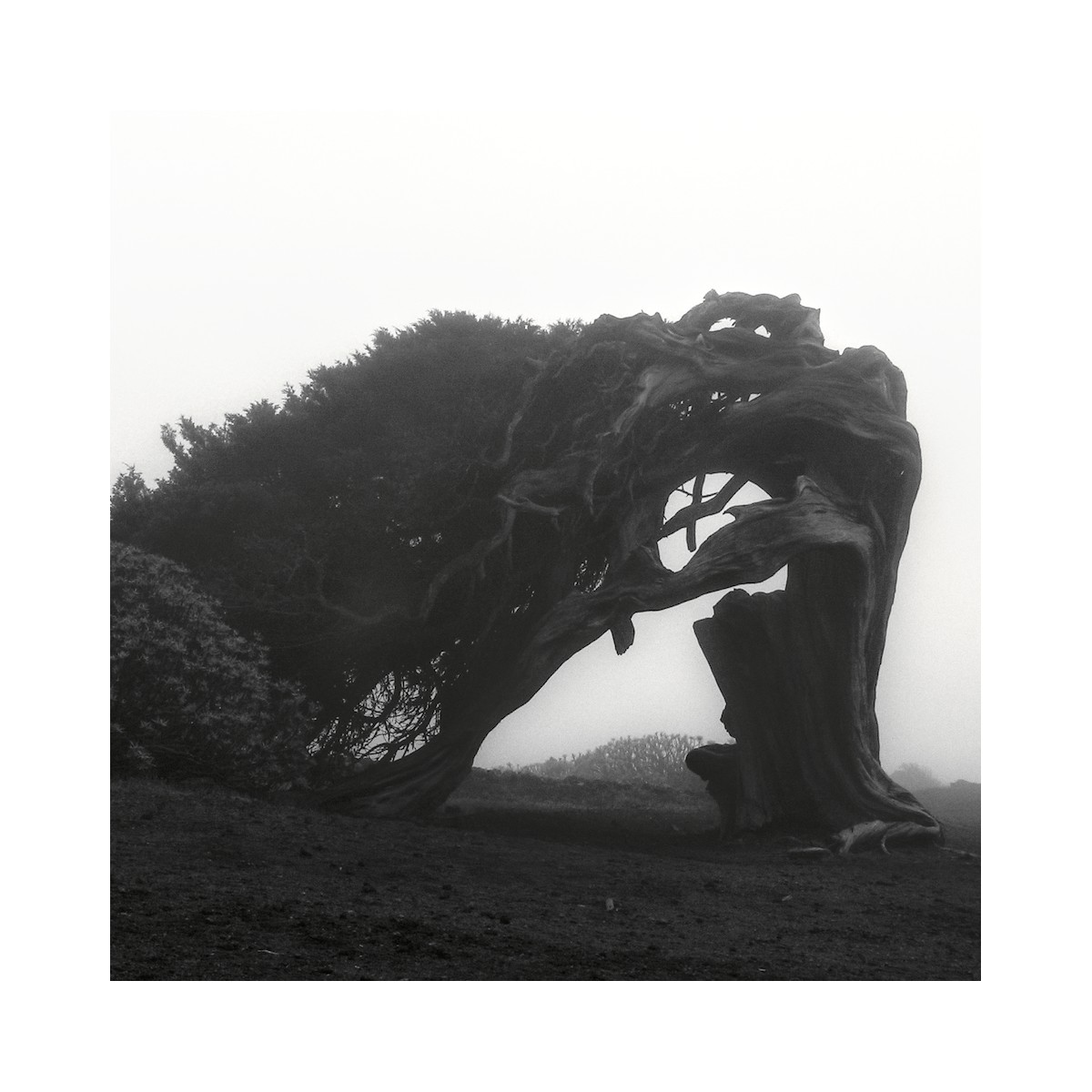
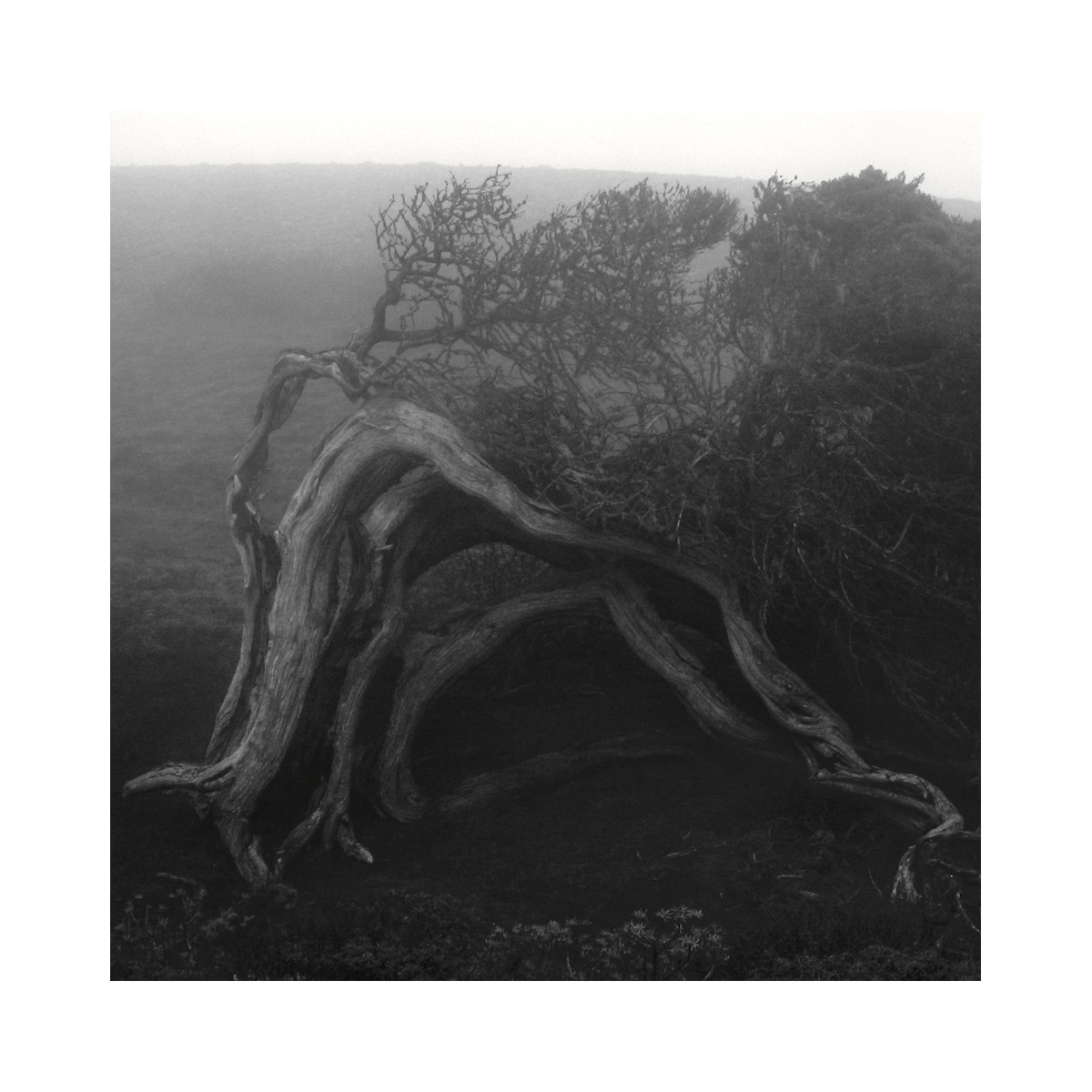
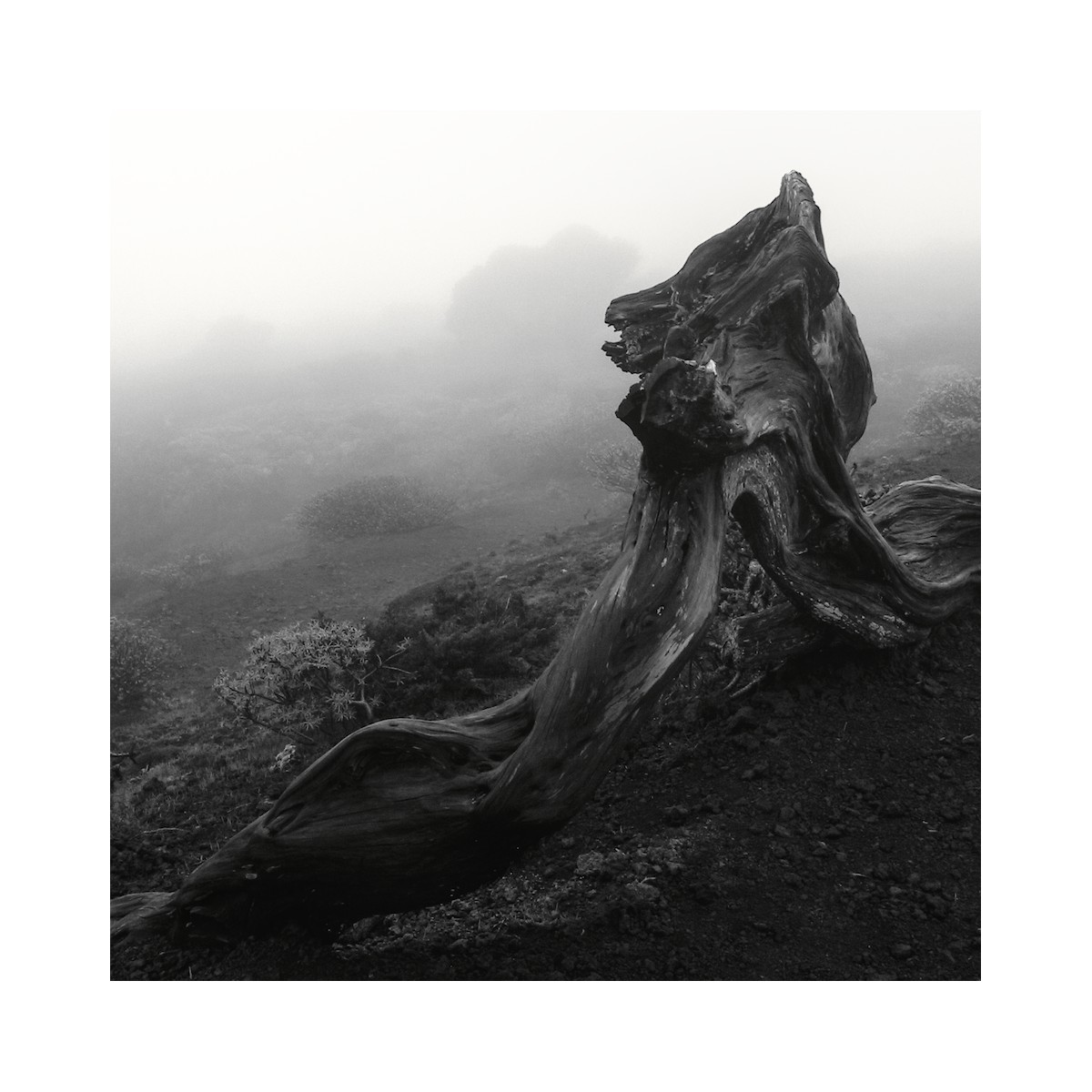
    El Sabinar – The Dance of the Juniper

    In the remote, solitary west of the Canary Island of El Hierro lies the barren plateau of La Dehesa. It is a rugged, primordial landscape of dark volcanic soil, shrouded for most of the year in dense, moisture-laden trade-wind clouds.

    Here, exposed to the full force of the elements, grows the last contiguous grove of Sabinas—centuries-old Phoenician junipers. Their continued existence is nothing short of a miracle, yet the struggle for survival has left its mark on them. Relentless, brutal storms lash across the plateau. Unable to withstand the forces of nature head-on, the trees yield to them: their trunks twist, coil, and bend until their crowns touch the ground.

    Shaped by the wind, they have taken on the very form of the gale itself. Amidst the silent mist, these creaking wooden sculptures resemble dancers frozen in perpetual motion—a monumental ballet sculpted by time and the wind.

    The Series: „La Danse des Sabines“ – Fragments of Stasis

    These photographs document more than a mere natural phenomenon; they make the invisible force of the wind visible. By deliberately eschewing color, the monochrome aesthetic strips the ancient juniper trees down to their pure, sculptural essence. The harsh light and deep shadows inherent to the black-and-white medium etch themselves into the wood’s texture, accentuating every twist, fissure, and grain pattern formed over the centuries.

    The dense trade-wind mist, bathing the background in a timeless, diffuse white, isolates these wooden protagonists from their actual surroundings. What remains is a visual score: a dynamic interplay of graphic lines, monumental arcs, and intimate details. The images capture the paradoxical beauty of this place—the delicate balance between the wood’s raw, unyielding hardness and the fluid, almost tender elegance of its movement. It is the portrait of an eternal ballet, captured in a single, silent moment.
    I hope you enjoy it, and as always, I am open to and grateful for any feedback!

    See you next time!

    Jochen

  • Is It Art, or Can It Go in the Bin?

    A Question of Definition

    This post was inspired by an article in the Austrian daily newspaper DerStandard.1 The article explored—at times with considerable irony—whether celebrities who also pursue successful careers in the visual arts owe their success to genuine artistic talent or ultimately merely to their fame.

    Naturally, this also involved a fundamental clarification of terms: What exactly is art—and who gets to decide what qualifies as art?

    People often stand in front of a modern work of art and loudly express the opinion that they—or their ten-year-old niece—could have produced it just as well. In that case, the only appropriate response is:

    “Perhaps. But did you?”

    Who Decides What Art Is?

    So who decides what art is? I would tend to agree with the view that this can ultimately be determined only by the creator of a work of art, by declaring it to be art.

    Who else should define it? A state commission, a popular vote, or perhaps the art market? If everyone were to establish their own binding definition, we would end up with millions of different definitions—which would not necessarily be particularly useful.

    And who am I to tell another person that what they have created is not art?

    Calling something art ultimately says nothing about whether, or what kind of, impression the work leaves on those who view it. Nor does it say anything about whether it can be successfully marketed or generate financial value in the art market. Here it certainly helps if your name is Johnny Depp or Sharon Stone!

    It is often said that art needs recipients—in other words, viewers or an audience. But here, too, the question arises: Where is the threshold? Is it ten people, 1,000, a million—or does a single millionaire ultimately suffice?

    And let us be honest: A work of art always has at least one recipient—its creator.

    Of course, everyone can and should develop their own criteria for deciding whether a work of art speaks to them or appeals to them. Over the decades, I have pieced together the following criteria from countless attempts at explanation by both authoritative and less authoritative voices.

    My Three Criteria for Art

    1. Intention

    The creative process begins with a conscious, free decision. That decision gives the object a meaning of a higher order.

    At the beginning of the twentieth century, Marcel Duchamp provoked and revolutionised the art world by, among other things, signing an ordinary urinal and exhibiting it in an artistic context.2 His so-called readymades made him world-famous and thoroughly unsettled the established concept of art.

    2. Execution

    For me, art also involves the concrete execution of a work: the choice of medium and tools, as well as the deliberate way in which they are used.

    In photography, for example, this includes composition and framing, the use of light, and also the choice of post-processing, printing method and paper. It is not only about the idea, but also about how that idea is realised.

    3. Responsibility

    The person who creates a work must be able to take responsibility for it. This responsibility has a legal, social and, above all, aesthetic dimension.

    The creator should, at least in theory, be able to explain what their intention was and why they chose the means they used.

    In my view, this also provides an elegant distinction from works created by artificial intelligence. Perhaps more on that in a later post.

    Head, Heart and Gut

    My personal understanding of art can also be summed up quite simply:

    A work of art must connect with my three “control centres”—the head, the heart and the gut. Ideally, it will engage all three at once.

    In other words, it must challenge me intellectually and move me emotionally—regardless of whether that response is positive or negative.

    This world can never have too much art! So don’t be shy—call your art art. Bring more beauty into the world and forge new connections.

    1. https://www.derstandard.at/story/3000000336045/von-johnny-depp-bis-ed-sheeran-diese-promis-machen-auch-kitsch-aeh-kunst ↩︎
    2. https://en.wikipedia.org/wiki/Fountain_(Duchamp) ↩︎
  • A new beginning

    So now it’s online, the new homepage! And I must say, I’m a little bit proud of myself! But let’s start from the beginning.

    Retreating from the Major Networks

    Just under two years ago, I radically shut down my social media activities. Dealing with the algorithms and all the garbage flushed into your timeline was just too exhausting. You could honestly think the world was on the brink of collapse!

    However, I didn’t want to give up on photography entirely—specifically, showing it off and talking about it. And that’s when I stumbled upon Bluesky! By now, we’ve built a small but wonderful community there, including plenty of fellow photography enthusiasts. And the whole thing happens completely free of that doomsday vibe. Feel free to drop by and check us out!

    Inspiration from the Bluesky Community

    Bluesky is home to the entire spectrum, from seasoned pros to casual snappers. Nobody tries to lecture anyone else on how things should look or work. It is incredibly refreshing.

    Some members also run their own websites. I want to put the spotlight on one of them today because it inspired me so much that I’m writing these lines on my own new homepage today: it’s the site by Mike Hindle (mikehindle.uk). It is great precisely because it scales back to the absolute essentials: images and text. No bling-bling, no flashy animations, and above all, no ads! Just bare information (and fun of course). Please visit his site and check it out!

    Moving Away from Clutter toward Minimalism

    I already had a website before. It was also running on WordPress, but it was hopelessly overloaded and—let’s just say—rather questionable regarding GDPR compliance! Mike’s site showed me that there is another way.

    I now rely on simple structures with the standard „TwentyTwentyFive“ theme and next to no plug-ins. The core advantage of WordPress is that you are truly free in your decisions. In return, it isn’t quite as easy to use as some website builders tailored for photography (like WIX, Zenfolio & Co.), but with those platforms, you always end up being the product yourself in some way.

    The Journey to the Finished Website (and How AI Helped)

    WordPress, on the other hand, requires a bit of know-how; you have to dive deeper into it. I built the entire site using a local WordPress environment and then migrated it over to my existing live WordPress domain in one go (well, at least almost).

    And that’s where we suddenly found a truly meaningful use case for AI! It can guide you around the odd technical cliff here and there. I will write a separate post about that soon. For now, I’m just happy to have the site live—thanks, Mike!

  • KISS…..not the rockband, although

    ‘All Hell’s Breakin‘ Loose’1

    When you decide to publish content online, you quickly encounter two invisible giants: data protection and copyright! And let’s get one thing straight: both are important and fundamentally sensible. In a broken internet, something like the GDPR is one of the last bastions, even if it’s being undermined or carelessly clicked away by users. So, if you want to make a website GDPR-compliant, it quickly becomes complicated. Or you can keep it as simple as possible: no third-party providers, no newsletters, no Google Fonts, etc.

    ‘Shout It Out Loud’2

    Therefore, none of that applies to this site. Of course, you don’t just want to stay within your own confines, but also broaden your horizons. Interesting photographers, a worthwhile exhibition. You’d love to report on it. That’s where the second giant comes into play: copyright! The (Austrian) copyright law protects the intellectual property of creators. There’s a simple rule of thumb on the internet: Anything you didn’t create yourself is, in all likelihood, copyrighted and cannot be used without permission. No, even proper attribution isn’t enough. And it doesn’t matter whether you have a purely private site, like this one, or a commercial blog with thousands of readers.

    Again, I also don’t want my images appearing on dubious websites, in advertising brochures, or on T-shirts without my knowledge and permission! But another absurdity of our current society is that some „artists“ or their legal representatives have made a business model out of simply sending out cease-and-desist letters without warning to every website where they can find their work. And finding it isn’t difficult these days. I’m not interested in that!

    ‘Lick it up’3

    That leaves only three options:

    Use only your own content. Even then, problems can arise (personal rights, property rights, etc.), which we’ll discuss another time. But all in all, you’re safe!

    Another option is embedding external sources. But that immediately brings the other giant into play: data privacy, since user data can quickly flow out without their consent.

    The only truly reliable solution is to use simple text links. This way, no external files end up on your server (no copyright infringement), and your visitor’s browser doesn’t establish an unwanted connection to third-party providers in the background (no GDPR violation). Only when readers actively click on the link do they leave your blog and see the content on the official platform. And that’s how I’ll continue to do it here for the time being.

    KISS, keep it simple, stupid!

    See you later!

    PS: Disclaimer: If anyone wants to engage with my photography, they’re welcome to do so. And they can even use it as an example. I’ve given my permission! Please just cite the source and link back to it. Any commercial use beyond that is, of course, out of the question! I know a lawyer, too…

    1. from the album Lick It Up by KISS, Released February 6, 1984 ↩︎
    2. from the album Destroyer by KISS, Released March 1, 1976  ↩︎
    3. from the album Lick It Up by KISS, Released September 18, 1983 ↩︎
  • Why we’re here… well, at least me!

    The Internet is broken!

    First, the bad news: The internet is broken! These days, when you Google something, the first results are usually commercial websites selling their products and paying to rank highly. Once you get past those, you’re bombarded with private websites. Clicking on them usually lands you in a vortex of ads. Because everything has to be monetized these days. The first and only rule of capitalism is: „Make the most of what you invest!“ So, every single recipe collection, no matter how useless, is plastered with ads, mostly consisting of bizarre AI-generated images or videos. The actual text is no longer recognizable, let alone readable! But most of the time, you can save yourself the trouble of reading the text on such sites anyway. The content isn’t important anymore, because the golden rule—you know the one! And besides problems like opaque tracking and a lack of data protection, digital advertising maintains an energy-hungry infrastructure whose CO2 emissions exceed those of the entire aviation industry!1 This leads to the bizarre situation that the carbon footprint of an online advertising brochure is five times that of a traditional printed brochure!2

    There is hope!

    But enough complaining! Let’s get to the positive! There are still websites on the internet that manage without advertising. Websites still run by real people and that still offer actual content. It makes sense to seek them out and share them! And this site aims to be one of those. Here, nothing will be sold to you that you don’t want. You won’t be bombarded with ads, no banner ads, and no „affiliate links.“ Your data won’t be collected and sold just so you can be here. You won’t even have a cookie slipped into your browser. This site is primarily about photography. And every now and then, I’ll allow myself to share my humble opinion on other topics that need to be adressed or otherwise drive me crazy.

    „Increase beauty and forge connections“

    That should be the guiding principle here. That will be the main focus! First and foremost, it should help me not to lose sight of the beautiful, the true, and the good amidst all the absurdities that unfold in this world of ours. If that then interests or inspires someone else, all the better! And if it appeals to you or challenges you, I’d be happy to hear from you.

    Thank you for your time!

    So far, so good! And if you’ve actually made it this far, then there is still hope for the internet!

    PS: I will, of course, try to cite sources for my claims. I cannot and will not assume any responsibility for these links.

    Sources:

    1. https://www.ipcc.ch/report/ar6/wg3/downloads/report/IPCC_AR6_WGIII_Chapter10.pdf
    2. https://www.oeko.de/fileadmin/oekodoc/2025-PCF_Print_vs_Digital_Werbung.pdf